
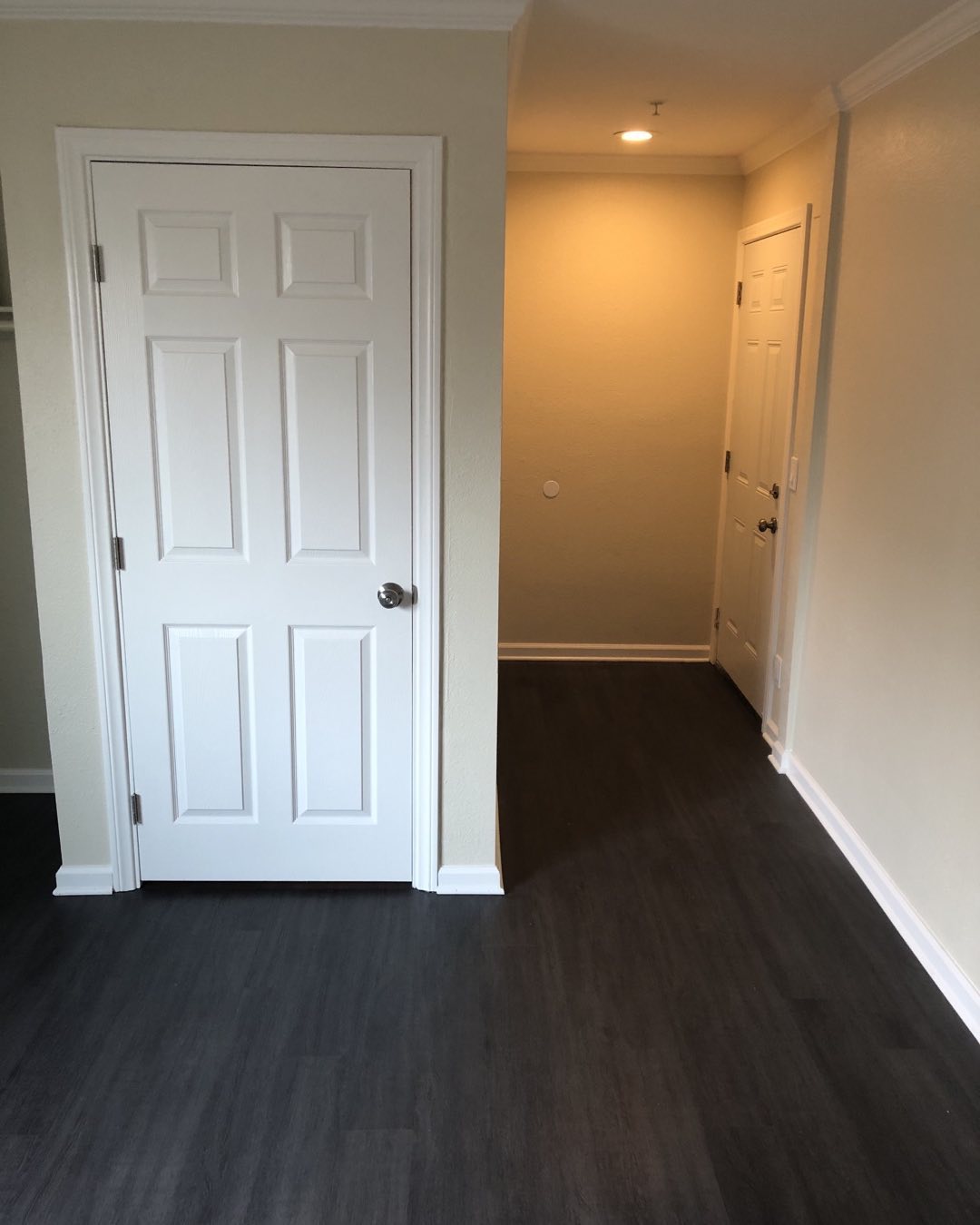
Flooring is the one finish that touches every room, takes the most abuse, and is the most disruptive to replace. Getting it right the first time is worth some thought.
Our climate matters here. Inland Empire summers are long and hot, homes run air conditioning for months, and there is more fine dust in the air than in coastal cities. That narrows the field in useful ways.
Tile
Strengths: essentially permanent, completely waterproof, and cool underfoot in August, which is not a small thing locally. Porcelain tile that convincingly imitates wood has gotten genuinely good.
Trade-offs: hard underfoot and unforgiving of dropped dishes. Grout lines need cleaning. Installation is the most labor intensive of the options, which shows in the price.
Best for: kitchens, bathrooms, laundry, entries, and whole house installations where you want to stop thinking about floors.
Luxury vinyl plank
Strengths: waterproof, warmer and softer underfoot than tile, and the most forgiving of a subfloor that is not perfectly flat. Current products look far better than the vinyl people remember.
Trade-offs: quality varies enormously between products. Thin wear layers scratch. It will not add the resale value real wood does.
Best for: families with pets and children, rentals, and projects where budget and durability both matter.
Engineered wood
Strengths: real wood on the surface, more stable than solid hardwood through our temperature swings, and it can often be refinished once.
Trade-offs: not waterproof. A dishwasher leak is a real problem. Direct sun will fade it over years.
Best for: living rooms, bedrooms and hallways in homes where the look of real wood matters.
Laminate
Strengths: the lowest cost per square foot and surprisingly scratch resistant.
Trade-offs: water is the enemy. Most laminate swells permanently if water sits on a seam. It also sounds hollow underfoot unless the underlayment is right.
Best for: bedrooms and low traffic areas on a tight budget.
The floor you choose matters less than the surface it goes on. We have seen expensive flooring fail on a bad subfloor and modest flooring last fifteen years on a good one.
Subfloor preparation is the whole job
Most flooring complaints trace back to preparation rather than product. On the slab foundations common here, that means:
- Flatness. Slabs are rarely flat. High spots get ground down, low spots filled. Skipping this produces flex, hollow sounds and failed seams.
- Moisture. Concrete releases moisture. A slab that tests high needs a moisture barrier, and installing over it without one is how a floor cups a year later.
- Transitions and height. New flooring changes floor height, which affects door clearance and how one room meets the next. Worth planning rather than discovering.
One question that tells you a lot
Ask any flooring installer what they will do to prepare your subfloor, and what happens if moisture testing comes back high. If the answer is vague, keep looking.
Thinking about a project like this?
We are a family-owned general contractor in Fontana, serving the Inland Empire for over twenty years. Free estimates, and no charge for the visit.
Call (909) 232-4669CSLB #1087664, Class B · Bonded and insured · BBB A+ rated · Se habla español